Forget the Weather: What Italian Tables Taught Us About Talking to Each Other
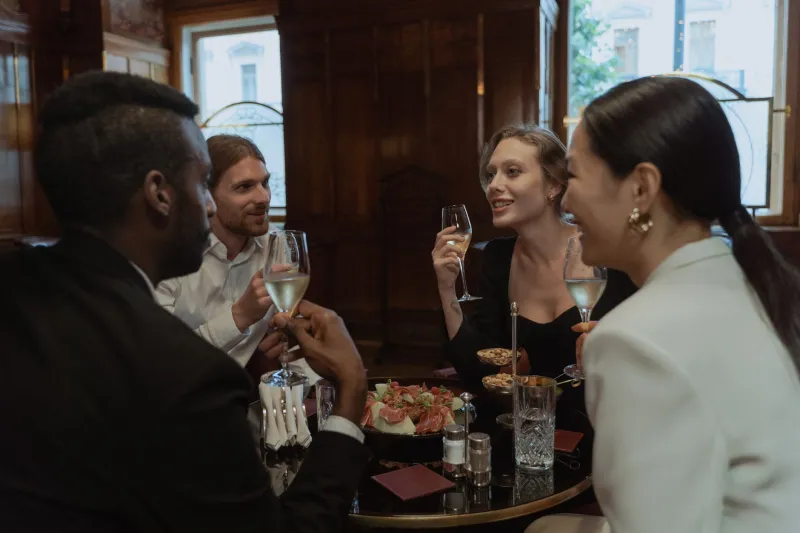
There's a particular kind of silence that settles over a British dinner party right after someone's asked about the commute and received a full answer. Everyone nods. Someone mentions the weather. Someone else reaches for the bread. The food is lovely, the wine is fine, and by nine o'clock you've learned absolutely nothing new about the people sitting two feet away from you.
It doesn't have to be like this. And if you've ever sat down to eat with an Italian family — or spent a long evening at a table in Venice, Rome, or Naples — you already know that.
The Table as a Place, Not a Pitstop
In Italian culture, dinner isn't a scheduled activity you fit around everything else. It's the thing. The meal is long not because the courses are endless (though they can be), but because the conversation is treated with the same care as the food itself. Nobody is checking their phone to see how long they've been there. Nobody is quietly calculating whether they can make the 9:15 train.
Lucia, a Milanese woman who moved to Dublin twelve years ago and has become one of the most familiar faces at Il Baccarò, puts it plainly: "In England and Ireland, people eat to refuel. In Italy, we eat to be together. The food is the excuse. The conversation is the point."
That distinction matters more than it sounds. When the meal exists to serve the relationship rather than the schedule, something shifts. People lean in. They argue properly. They laugh at things that actually happened. They ask follow-up questions.
What Makes Italian Conversation Different
It's tempting to romanticise this — to imagine every Italian table as a scene from a Fellini film, all gesticulation and passionate disagreement. The reality is both simpler and more interesting than that.
Italian conversation at the table tends to be present-tense. People talk about what they're eating, who made it, where the ingredients came from. They talk about something they read that week, a film they saw, an opinion they've been turning over. There's a willingness to hold a position and defend it, to disagree without it becoming awkward, and to move on without anyone taking it personally.
Compare that to the British instinct — deeply ingrained, and not without its charms — to smooth everything over, to keep things light, to avoid the topics that might cause friction. The result is often conversation that's warm but somehow weightless. Pleasant and forgettable in equal measure.
Marco, who grew up in Bologna and has been living in Dublin for seven years, laughs when asked about the adjustment. "The first year, I thought Irish people didn't like me. Everyone was so friendly, but nobody ever said anything real. Then I realised — that is the real. You just have to learn to read it differently." He pauses. "But I still prefer it our way."
The Linguistics of Lingering
There's something in the Italian language itself that encourages this kind of presence. The word conversazione carries more weight than its English equivalent — it implies a genuine exchange, a back-and-forth that builds something. Chiacchierare, the verb for chatting, has a warmth to it that "small talk" entirely lacks.
And then there's stare — the verb that means both "to be" and "to stay." In Italian, you don't just have dinner with someone. You stay with them. The language builds the expectation of lingering right into its grammar.
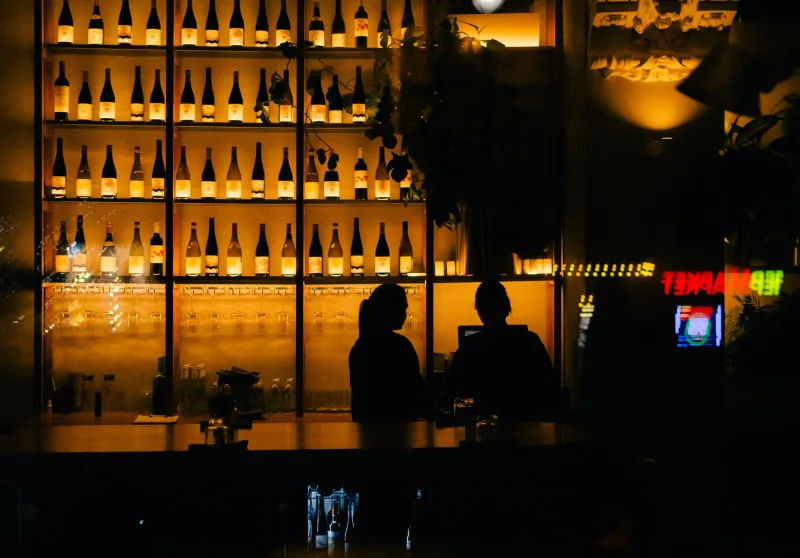
At Il Baccarò, that spirit is baked into the atmosphere. The tables are close enough that conversations occasionally bleed into each other. The cicchetti arrive slowly, by design. The wine is poured generously but not hurriedly. There's no ambient pressure to turn the table.
"We want people to forget what time it is," says one of the team. "That's the whole idea."
Why the UK Finds This Hard
This isn't a criticism — it's a structural observation. British and Irish dining culture has been shaped by different forces: the pub as the primary social venue, the working lunch as a business tool, the dinner party as a performance of domestic competence. These aren't bad things. But they do create habits that work against depth.
The pub, for all its warmth, isn't designed for long conversation — it's loud, it's standing, it's transactional in its own way. The restaurant, in the UK context, often carries an unspoken efficiency: you're there to eat, the waiter needs the table, everyone's got somewhere to be.
Italian dining culture resists all of this. The meal is not a service transaction. It's a social contract.
How to Bring It Home
You don't need to book a flight to Naples or even a table at Il Baccarò (though we'd encourage the latter). A few simple shifts can change the texture of an evening at home.
Put the phones away before anyone sits down. Not on the table face-down — actually away. The absence of the option changes behaviour faster than any good intention.
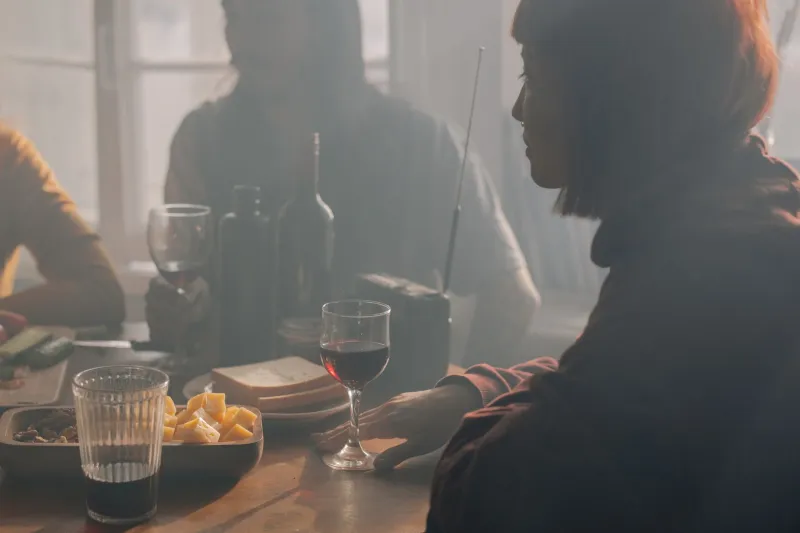
Start with something to pick at while you cook. The aperitivo hour exists partly to get people talking before the formality of sitting down. Olives, a bit of cheese, a glass of something cold — it loosens the room.
Ask questions you don't know the answer to. Not "how's work" but "what's been on your mind lately" or "what's the last thing that changed how you think about something." It sounds contrived until it isn't.
Let the meal take longer than it needs to. Cook things in stages. Bring out courses slowly. Give the conversation room to develop rather than rushing toward the point where everyone retreats to the sofa.
Disagree, gently. Italian table culture isn't conflict-averse — it's just honest. If someone says something you don't agree with, say so. It's more interesting than nodding.
What You're Actually Doing
At its core, this is about treating the people you eat with as worth the full attention of an evening. Not half your attention while you scroll, not the polished version of yourself performing competence — just you, present, curious, willing to say something real.
The Italian table understands something that British dining culture sometimes forgets: food is the vehicle, not the destination. The destination is each other.
And if you want a head start on all of this, you know where to find us.