Turn Any Corner of Your Home Into a Venetian Bacaro (No Renovation Required)
There's a moment that happens in every good bacaro — that narrow, shoulder-to-shoulder Italian standing bar where the wine is cheap, the cicheti are excellent, and nobody is in any particular hurry to leave. Someone tops up your glass without being asked. A stranger leans over to agree with something you just said. The conversation gets louder, then quieter, then loud again. Time does something odd. You forget, briefly, that you have anywhere else to be.
That feeling isn't the product of expensive interior design. It's the product of proximity, warmth, and the quiet understanding that this space exists purely for pleasure. The good news? You can build it at home — and you don't need to knock down a single wall to do it.
Start with the Counter, Not the Sofa
Most British living rooms are designed around seating. Sofas face televisions. Armchairs cluster around coffee tables. Everything points inward, toward comfort and passivity. The bacaro flips this logic entirely. The counter is the heart of the room — it's where you stand, lean, gesture, and refill. If you want to recreate that energy at home, you need something to lean against.
A butcher's block island in a kitchen works brilliantly. So does a narrow console table pushed against a wall, raised to bar height with the addition of a few tall stools. Some Dublin households we've spoken to have repurposed old wooden dressers, removing the upper shelving and replacing it with a clean marble or slate surface at standing height. The point isn't perfection — it's function. You want a surface that says stay here a while rather than find a seat.
Bar stools are fine, but don't lean too heavily on them. The bacaro is a standing culture. People perch, they shift, they move around each other. A stool or two gives guests somewhere to rest, but the energy should encourage movement rather than settling.
Lighting Is Doing More Work Than You Think
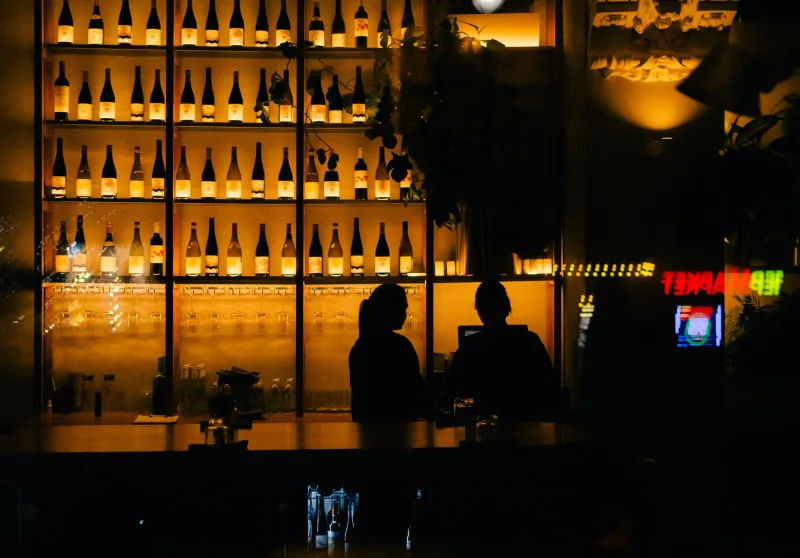
Walk into almost any bacaro in Venice and you'll notice the light is doing something specific. It's warm — amber rather than white — and it's directional. Bottles glow on shelves. Faces are lit softly. Nothing is overhead and harsh. There's an intimacy to it that has very little to do with how many candles are present and everything to do with how the light is positioned.
At home, the single biggest improvement most people can make is switching off the main ceiling light entirely during hosting. Replace it with a combination of plug-in wall sconces, table lamps set on shelves or counters, and — yes — candles. Edison bulbs in warm white (2700K or lower) make an enormous difference. If you have pendant lights above a kitchen island, lower them as far as they'll go. The closer the light source is to eye level, the more intimate the space feels.
In several Dublin homes that have embraced this approach, the transformation is striking. One couple in Rathmines described removing their bright overhead kitchen light from their hosting routine entirely: "People started staying two hours longer than they used to. We genuinely think it's the lighting." They're probably right.
Glassware: Less Is More, but Better Is Everything
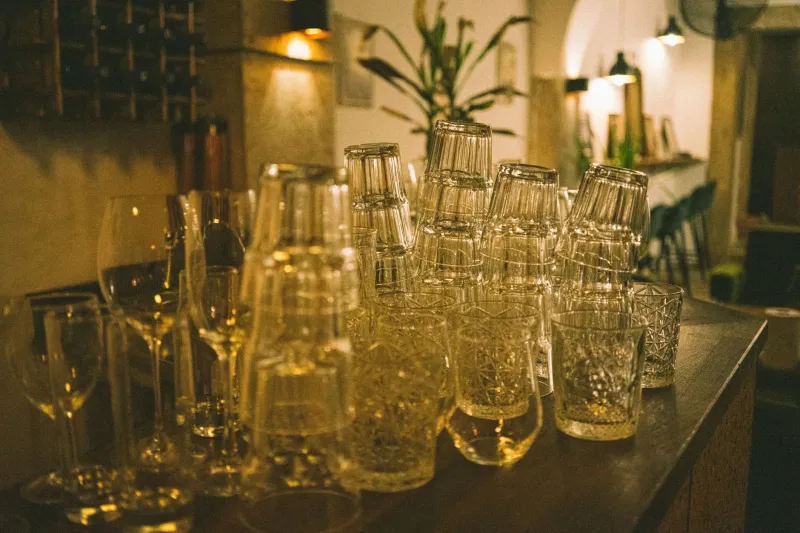
The bacaro doesn't do elaborate glassware. You won't find crystal stems or oversized bowls. What you will find are small, unpretentious glasses — often the kind that look like they've been used a thousand times, because they have. The ombra, the traditional Venetian small glass of wine, is practically a tumbler. It's designed to be refilled constantly, not nursed.
For home hosting, this is liberating news. You don't need a matching set of twelve. You need enough small glasses that nobody's ever waiting for a refill, and you need them to feel pleasant in the hand — a little weight, a little character. Riedel makes affordable ranges. Ikea's Försiktigt glasses have a cult following for good reason. Markets and charity shops across the UK are full of mismatched Italian-style tumblers that cost almost nothing and look genuinely charming lined up on a shelf.
The rule is: keep glasses small, keep them coming. The bacaro philosophy is one of continuous, gentle hospitality rather than the formal pour-and-wait rhythm of a dinner party.
The Shelf as Statement
In a bacaro, the back wall behind the counter is never empty. It's a display of bottles, glasses, perhaps a few cured meats hanging from hooks, maybe a handwritten list of what's available today. It communicates abundance without excess. It says: we have things here, come and look at them.
At home, building a dedicated drinks shelf — even a single floating shelf above your counter space — creates this same sense of purposeful display. Arrange bottles by region if you're feeling organised, or simply by what you love. Add a few glasses hung upside down if you have the hooks. Stack a small plate or two. The goal is visual warmth, not a showroom.
Some hosts in the Dublin Italian community have taken this further, pinning a small handwritten card to the shelf listing what's open that evening — two whites, a red, a spritz option. It sounds theatrical, but guests respond to it. It tells them they're somewhere that has thought about them.
Hosting the Bacaro Way
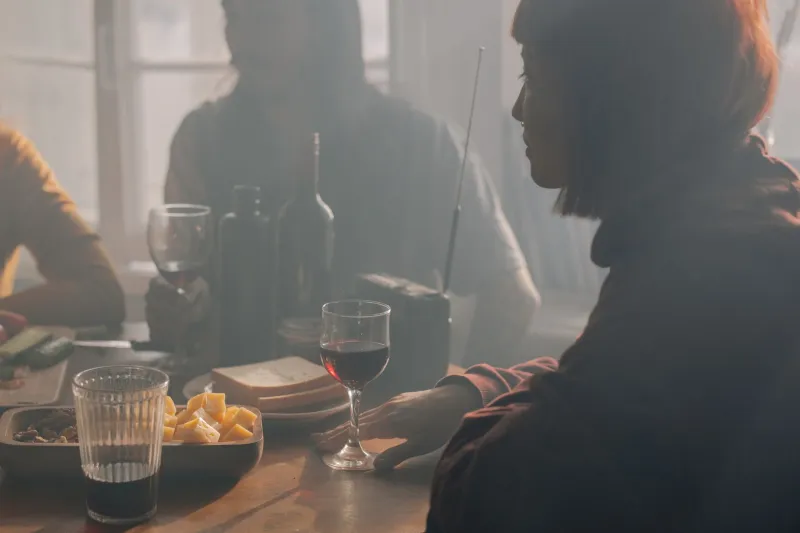
The furniture and lighting matter, but the philosophy matters more. The bacaro is not a dinner party. There's no seating plan, no formal progression of courses, no moment where everyone sits down at once. Food arrives as it's ready — a board of cheese, some olives, a few slices of something cured, maybe a small warm bite from the oven. Wine is poured when glasses are low. Conversation moves freely.
For UK hosts accustomed to the structured dinner party format, this can feel like a loss of control. It isn't. It's a transfer of control to the guests themselves, and they almost always rise to it. People relax faster when they're not waiting for permission to eat. They talk to more people when they're standing. They stay longer when there's no formal end to proceedings.
Start small. Invite four or five people. Open two bottles. Put out three things to eat. Stand at your counter rather than disappearing into the kitchen. See what happens.
The Space You Already Have
Here's what strikes us most when we talk to people who've tried this at home: they almost always say they didn't need more space, they needed to use the space they had differently. A kitchen in a Victorian terrace in Leeds. A galley flat in Edinburgh. A ground floor maisonette in South London. These are not large rooms. But they became, for an evening, somewhere that felt genuinely alive.
That's the bacaro lesson, distilled: the room isn't the point. The people in it are. Give them something to lean on, something to drink, something to eat, and light that makes everyone look their best. The rest takes care of itself.