Make Your Kitchen the Room Everyone Ends Up In: Lessons from the Venetian Bacaro
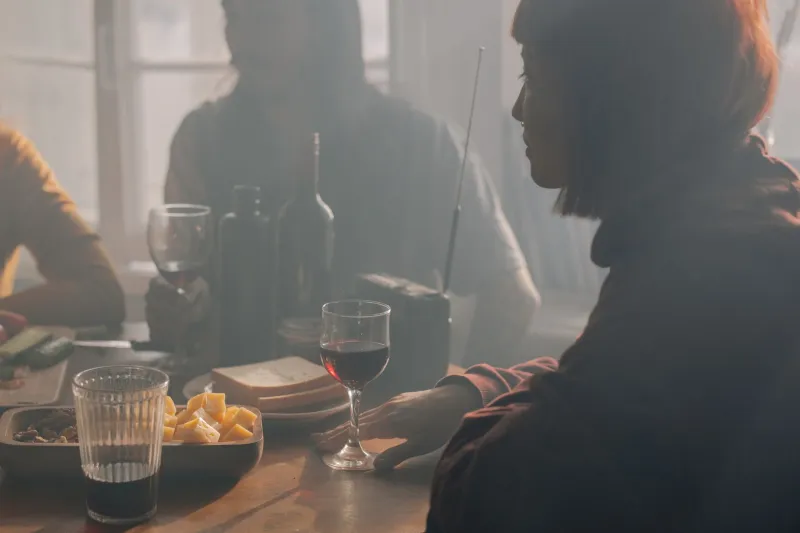
You've done it. You've tidied the sitting room, plumped the cushions, lit a candle on the coffee table. And then your guests arrive and spend the entire evening standing around your kitchen worktop. Every time.
Here's the thing: you should stop fighting it. That instinct — the pull toward warmth, toward wherever the food is being prepared, toward the casual and the unscripted — is exactly what the Venetian bacaro has been banking on for centuries. The bacaro isn't a restaurant in the formal sense. It's a neighbourhood wine bar where you stand, you lean, you eat something small, you talk, and you stay longer than you meant to. No reservations, no ceremony, no pressure. Just a counter, some cicheti, a glass of something honest, and the particular magic that happens when people aren't trying too hard.
The good news is that you don't need a commercial kitchen or a Venetian canal outside your window to replicate this. You just need to understand what actually makes people linger — and then build around that.
Start With the Counter, Not the Table
The dining table is a commitment. It implies courses, assigned seating, a beginning and an end. The counter, by contrast, is an invitation. It says: come and go as you please, refill your own glass, help yourself.
If you have a kitchen island, you're already halfway there. The key is making it genuinely usable — not a display surface, but a working one. Clear it off. Set out a wooden board with a few things on it: some good cheese, a bit of cured meat, olives, perhaps a small dish of marinated vegetables. Nothing elaborate. The bacaro principle is abundance through simplicity, not complexity.
If you don't have an island, a sturdy butcher's block or even a well-positioned console table can do the same job. The point is to create a surface at standing height where people can gather without needing to sit down. Standing is, counterintuitively, more sociable. It keeps conversations fluid, allows people to move around, and removes the slightly formal energy that comes with being seated.
Lighting Is Doing More Work Than You Think
Venetian bacari are rarely bright. They tend toward warm, low light — the kind that softens faces and makes a glass of wine look like something worth pausing over. This isn't accidental. Lighting is one of the most powerful tools in hospitality design, and it's one that most home kitchens get completely wrong.
Bright overhead lighting — the standard fluorescent strip or a harsh ceiling pendant — is practical for cooking but terrible for atmosphere. Once the cooking is done, dim it right down or switch it off entirely. Invest in a few simple plug-in lamps with warm bulbs (look for anything under 2700K on the colour temperature scale) and position them at counter height rather than overhead. Candles are obvious but they work — a cluster of different heights on the worktop costs almost nothing and changes everything.
The goal is to make your kitchen feel less like a functional room and more like somewhere you'd want to spend an hour without any particular reason.
Glassware: The Small Detail That Changes Everything
In Venice, wine is served in a small, simple glass called an ombra — literally 'shadow', supposedly named after the habit of following the shade across St Mark's Square to keep your wine cool. The glass itself is unshowy. Thick-rimmed, unpretentious, the kind of thing you'd use without worrying about breaking it.
This is worth thinking about when you're setting up your home bacaro space. The tall, fragile wine glasses you bring out for dinner parties create a subtle anxiety — people hold them carefully, worry about knocking them over, feel slightly on their best behaviour. Smaller, sturdier glassware does the opposite. It says: relax. Have another. Don't make a thing of it.
You don't need to buy anything special. A set of small tumblers or bistro-style glasses from any decent homeware shop will do the job beautifully. Put them out somewhere people can reach them without asking. That small act of access — being able to help yourself — is enormously important to the bacaro feeling.
The Food Should Be Simple Enough to Ignore
This sounds strange, but bear with it. The food at a bacaro is good — really good, often — but it's not the point. It's there to accompany the conversation, not to demand attention. Cicheti (the Venetian equivalent of tapas) are small, ready to eat, and designed to be picked at rather than plated up. A slice of bread with something on top. A marinated anchovy. A little stuffed pepper.
For a home gathering, this translates to: don't cook anything that requires you to leave the room. Charcuterie, good bread, tinned fish (which has had a very deserved moment in the UK recently), roasted nuts, a dip or two — these are your friends. The less time you spend at the hob, the more time you spend in the room with your guests, and that's the whole point.
If you want to add something warm, a small pot of something that can sit and wait — a simple white bean dish, some braised lentils — works perfectly. It smells good, it keeps, and it requires nothing from you once your guests arrive.
Furniture That Invites Staying Without Demanding It
The bacaro works partly because there's no obligation. You can stand for ten minutes or two hours. The space accommodates both without making either feel wrong.
At home, this means having a mix of seating and standing space rather than forcing everyone to sit or everyone to stand. A couple of bar stools at the counter, a bench along one wall, perhaps a chair or two nearby — but not a full dining set-up that implies a structured meal is incoming. You want people to be able to drift in and out of conversation, move around, find their own comfortable spot.
Soft furnishings help, too. A kitchen rug, a cushion on a stool, a throw draped somewhere — these are small signals that say this room is for staying in, not just passing through.
The Real Ingredient: Your Own Unhurriedness
All of this — the lighting, the glassware, the food, the furniture — is in service of one thing: an atmosphere where people feel they have nowhere better to be. And that atmosphere starts with you.
The bacaro owner who's rushing, checking the time, apologising for the mess, steering people toward the door — they don't exist. The bacaro is run by someone who has all the time in the world, who's genuinely pleased you came, who'll pour you another without being asked.
You can do the same. Tidy what matters, let go of what doesn't, and make your peace with the fact that your kitchen will look lived-in by the end of the night. That's not a failure. That's the whole point.
At Il Baccarò, the thing we hear most often from guests isn't about the food or the wine — it's about how they didn't mean to stay so long. That's the highest compliment a space can receive. And it's entirely within reach, even in a flat in Hackney or a terrace in Leeds, if you get the basics right and resist the urge to make it complicated.
Simple food. Good wine. Warm light. A counter to lean on. The rest takes care of itself.


