Cicheti, Ombre, and the Art of Standing Still: Venice's Bacari Culture Arrives in Dublin

There's a particular kind of freedom in a place where nobody expects you to sit down. No reservation, no tasting menu, no server hovering to ask if everything's okay with your mains. Just a glass of something cold, a bit of counter space, and the low hum of conversation around you. That's a bacaro, and if you've ever found yourself wedged into one on a side street near the Rialto, you'll know exactly why people keep coming back.
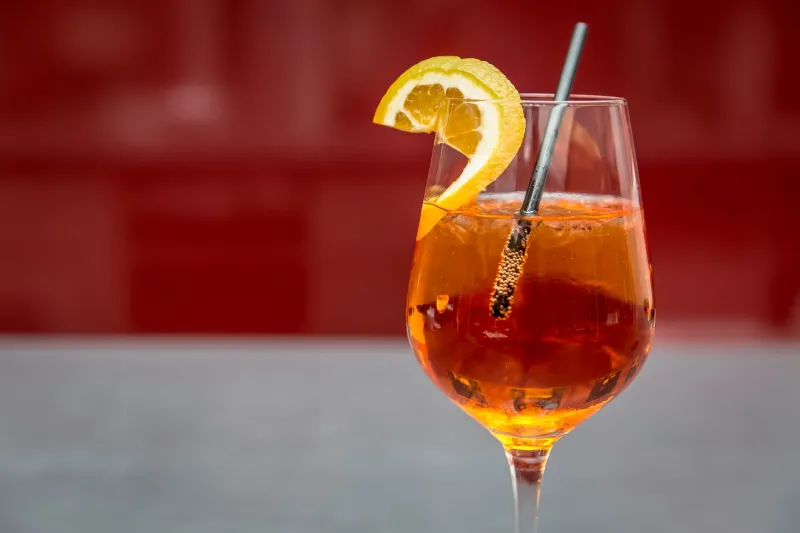
Venice's bacari — pronounced bah-KAH-ree, singular bacaro — are among the oldest drinking institutions in Italy. Some trace the name back to Bacchus, the god of wine, though Venetians themselves tend to shrug at the etymology and just point you towards the nearest one. What matters isn't the origin story. What matters is the ritual: a small glass of house wine (an ombra, or shadow), a few pieces of cicchetti — the Venetian answer to tapas, essentially — and the kind of easy, unhurried sociability that doesn't require a booking two weeks in advance.
What Makes a Bacaro a Bacaro
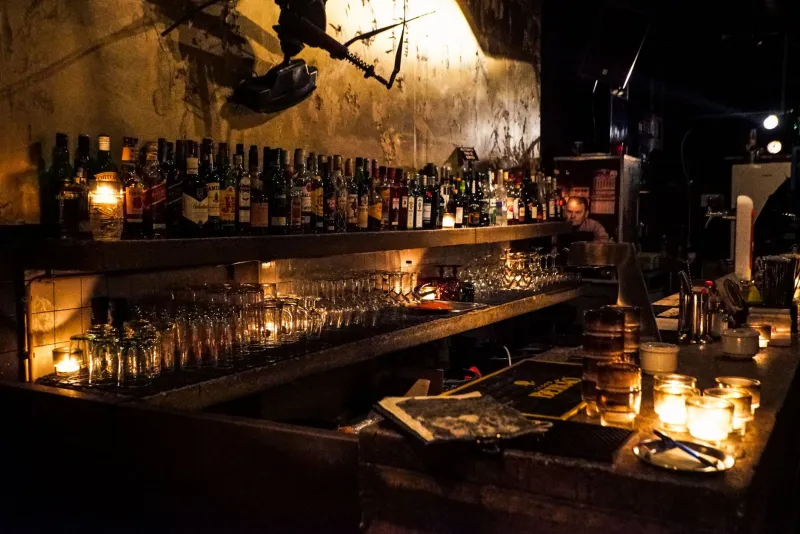
The bacaro is not trying to be anything other than what it is. That's the whole point. Where a proper restaurant demands a certain performance from its guests — the right clothes, the right occasion, the right level of hushed reverence — a bacaro asks only that you show up, order something, and make room for the next person when you're done.
Cicchetti are central to the experience. These are small, shareable bites served on bread or skewers, or simply piled onto a small plate: a slick of salt cod (baccalà mantecato) on a crostino, a wedge of hard cheese, a meatball no bigger than a walnut, a folded slice of mortadella. Nothing is precious. Nothing is plated with tweezers. The food exists to accompany the wine, and the wine exists to accompany the conversation.
The wine itself is typically local and unpretentious — a Soave, a light Raboso, a chilled Prosecco that has nothing to do with the stuff sold at airport departure lounges. Many bacari now lean towards natural and low-intervention wines, which suits the ethos perfectly. These are wines that taste like somewhere specific, made by people who care more about the vineyard than the label.
Why Dublin Was Ready for This
Dublin's pub culture is, in many ways, the spiritual cousin of the bacaro tradition. The local, the regular, the unreserved stool at the end of the bar — these are things Dubliners understand instinctively. What the city has sometimes lacked is a middle ground between the traditional boozer and the polished gastropub, where the cocktail list runs to four pages and the lighting has clearly been designed by someone who charges by the hour.
The bacaro fills that gap. It offers something genuinely convivial without the formality, something food-focused without the fuss. And crucially, it offers wine — good wine, interesting wine — as the main event rather than an afterthought.
The timing feels right, too. There's a growing appetite in Dublin for the kind of European drinking culture that prioritises quality over quantity, pleasure over performance. People want to eat well without it becoming an occasion. They want to try a glass of something unfamiliar without committing to a full bottle. They want somewhere they can drop in on a Tuesday evening without feeling underdressed.
The Spirit Behind Il Baccarò
The name itself is a nod to this tradition. Il Baccarò — our little corner of Venetian culture on the Liffey — was built on exactly this philosophy. The idea was never to replicate a Venetian bacaro wholesale, because Dublin is Dublin and it deserves something that belongs here. But the spirit — the informality, the emphasis on good wine and simple, honest food, the sense that everyone is welcome and nobody needs to be anywhere else — that translated without much difficulty.
What we've found, working in this space, is that the bacaro concept resonates with people who are slightly exhausted by the pressure of fine dining but haven't lost their appetite for genuine quality. They want the cicchetti, the natural wine, the noise and the warmth. They just want it to feel like theirs.
A Quiet Revolution on Dublin's Streets
Across the city, there are signs of this shift. A handful of small wine bars have opened in recent years that share the bacaro's DNA, even if they don't use the word: intimate rooms, short menus built around snacking, wine lists that favour small producers and unusual grapes. The gastropub model — with its Sunday roasts and craft lager taps and enormous laminated menus — still dominates, but it's no longer the only option.
The chefs and restaurateurs driving this change tend to have similar stories. Many have spent time in Italy, often in Venice specifically, and came back unsettled by the contrast. They'd experienced somewhere that did things simply and got them exactly right, and they wanted to bring a version of that home.
There's also a generational element. Younger Dubliners who've travelled widely, eaten broadly, and spent time in cities like London, Barcelona, and Lisbon are returning with different expectations. They're not looking for theatre. They're looking for somewhere that feels real.
The Cicchetti Question
One practical challenge in bringing bacari culture to Dublin is the cicchetti itself. The Venetian originals are tied to a specific larder — the baccalà, the sarde in saor, the moeche (soft-shell crabs) that are entirely local to the lagoon. Replicating them exactly would be both impossible and slightly beside the point.
What works better is the principle: small bites, good ingredients, nothing overworked. Irish producers offer extraordinary raw material — seafood, dairy, charcuterie — that lends itself beautifully to the cicchetti format. A piece of smoked mackerel on sourdough. A sliver of aged Coolea cheese with honey. Oysters with a splash of something acidic. The form is Venetian; the ingredients are emphatically local.
This is, in a sense, exactly how the bacaro tradition has always worked. It's never been about following a recipe. It's been about using what's good, keeping it simple, and making people feel at home.
Standing Room Only
If there's one thing the bacaro teaches, it's that comfort doesn't require a chair. Some of the best evenings happen on your feet, glass in hand, elbows on a counter, talking to whoever happens to be next to you. There's a democracy to it that's genuinely rare in the restaurant world.
Dublin, with its easy sociability and its long tradition of the pub as community space, seems like exactly the right place for this. The bacaro isn't replacing anything. It's just adding another way to gather — a little more Italian, a little more wine-forward, and perhaps a little more willing to let the evening take its time.