When Your Hands Do the Talking: How Italian Gesture Culture Is Loosening Up Dublin's Social Scene
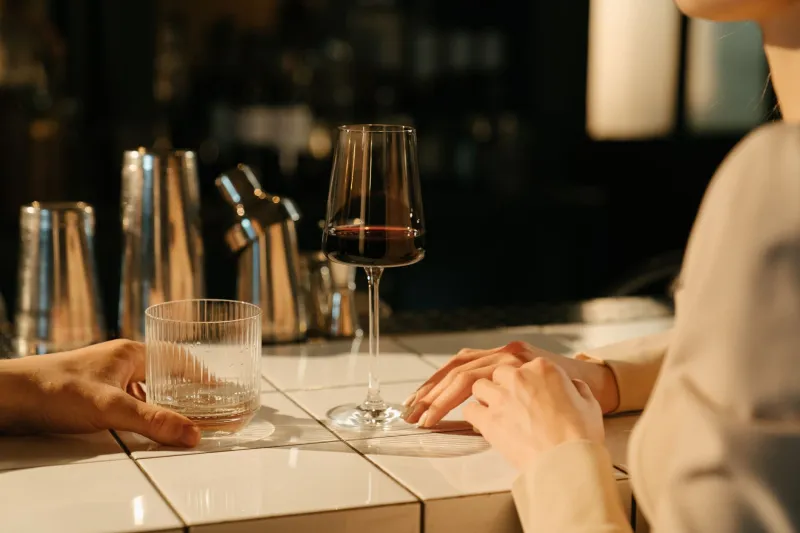
There's a moment, somewhere between the first ombra and the second, when something shifts. A Dublin regular — suit jacket still buttoned, the kind of person who apologises for bumping into a chair — starts to gesture. Not wildly. Not theatrically. Just a small pinch of the fingers, a slight raise of the palm, an eyebrow arched in a direction that means you know what I mean. And somehow, everyone at the bar does.
This is the quiet social revolution happening at Il Baccarò, and it didn't arrive with a manifesto. It arrived with the food, the wine, and the Italians who brought their whole communicative selves through the door.
The Body Speaks Before the Mouth Opens
Italian non-verbal communication isn't an accessory to conversation — it's a language in its own right. Linguists and anthropologists have studied it for decades, cataloguing hundreds of distinct gestures that carry precise meaning without a single word. The flattened hand drawn slowly under the chin (fregarsene — roughly, I couldn't care less). The bunched fingertips raised upward (cosa vuoi? — what do you want?). The slow, deliberate tapping of the index finger against the cheek, which signals that something is particularly clever or delicious.
In Italy, these movements are absorbed in childhood. They're passed across kitchen tables, reinforced in markets, refined at bars. By adulthood, they operate below the level of conscious thought — as natural as blinking.
In Dublin, they arrive like a foreign film without subtitles. And then, gradually, people start to understand.
What Happens at the Bar
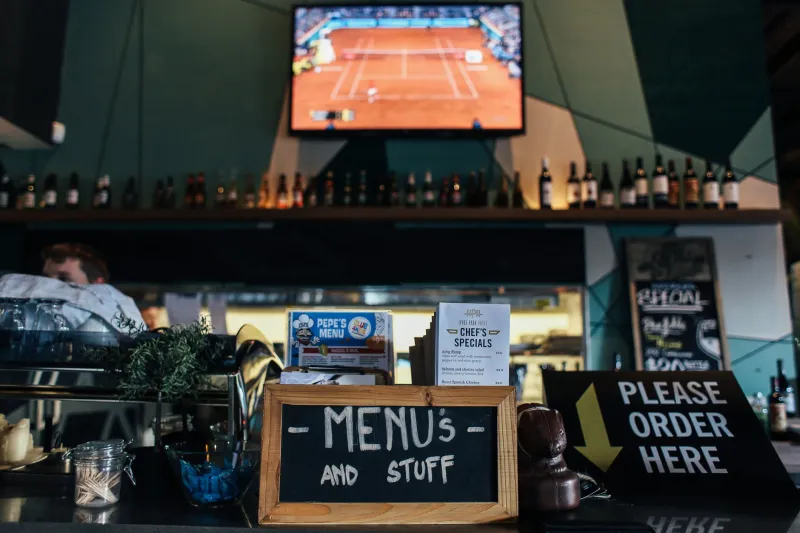
Il Baccarò is not a large space. That's rather the point. The Venetian bacaro tradition was never built for distance — it was built for proximity, for the kind of conversation that happens when you're shoulder to shoulder with a stranger over a small plate and a glass of something honest. In that context, gesture isn't a performance. It's a practical tool.
When the bar is full and the music is low and someone across from you is trying to explain that the sopressa is better than the mortadella tonight, they're not going to do it with a PowerPoint presentation. They're going to do it with their face, their hands, the tilt of a head. And you're going to understand them.
This is how the vocabulary spreads. Not through instruction. Through immersion.
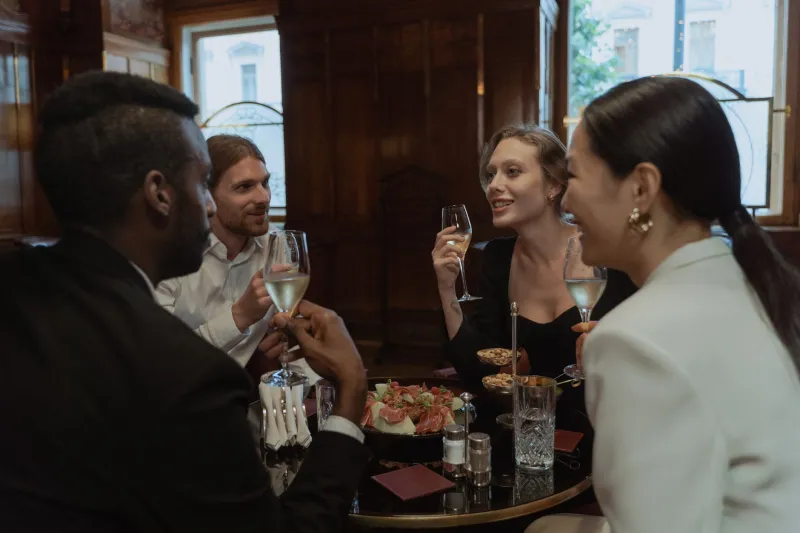
Staff here have noticed it for years — the way a group of Dubliners who arrived stiff and slightly formal are, by the end of the evening, communicating in a register that would have seemed foreign to them two hours earlier. Arms more open. Faces more mobile. Silences filled not with awkward throat-clearing but with a raised eyebrow or a small, knowing smile.
British Reserve and What's Underneath It
It would be lazy to simply say that British and Irish people are emotionally repressed. The truth is more nuanced and, frankly, more interesting. The Anglo-Irish tradition of social restraint isn't an absence of feeling — it's a particular discipline around the expression of feeling. There are whole novels about this. There are entire comedic traditions built on the gap between what someone says and what they actually mean.
But that discipline has a cost. When the social script demands understatement, genuine warmth can get lost in translation. Enthusiasm becomes suspect. Directness feels aggressive. And so people perform a kind of careful neutrality in public that has very little to do with what's actually going on inside them.
Italian gesture culture, at its best, short-circuits all of that. It doesn't ask you to be someone else. It just offers a different toolkit — one where you can convey delight or disbelief or deep appreciation without having to carefully construct a sentence that hedges all three.
At the bar, that toolkit turns out to be remarkably welcome.
Learning Without Lessons
Nobody at Il Baccarò sits down to study Italian body language. There's no tutorial, no explainer card tucked behind the wine list. What happens is subtler and more organic than that.
You watch the person next to you describe the wine they've just tasted — fingers spread slightly, head tilted, a soft exhale — and something in that movement communicates texture, warmth, pleasure, in a way that the words it's quite nice simply cannot. So the next time you want to convey the same thing, you reach for that gesture. Not consciously. Just because it's there now, and it fits.
This is how cultural borrowing actually works. It's not appropriation or imitation. It's recognition — the realisation that another culture has solved a problem you didn't know you had.
For a lot of Dublin's bar-goers, the problem was this: how do you communicate genuine warmth in a social setting without making everyone uncomfortable? Italian gesture culture, it turns out, offers several very elegant answers.
The New Social Vocabulary
What's emerging in spaces like Il Baccarò is something genuinely new. Not Italian. Not traditionally Irish. Something hybrid and unscripted — a way of being at a bar that borrows the expressiveness of one tradition and the dry wit of another, and somehow makes both more alive in the process.
Regulars who've been coming for a year or two will sometimes catch themselves mid-gesture and laugh. I've been doing that Italian thing with my hands again. But they keep doing it, because it works. Because the person across the bar understood them immediately, without the usual dance of qualification and clarification that English-language social interaction so often requires.
And the Italians in the room — the staff, the regulars who've been in Dublin for a decade, the visitors who stumbled in from a nearby hotel — they notice it too. Not with condescension. With something closer to recognition. The gesture crosses the table, lands correctly, and for a moment, the bar feels less like a room divided by language and more like a room full of people who've found a common frequency.
A Small Plate, a Big Shift
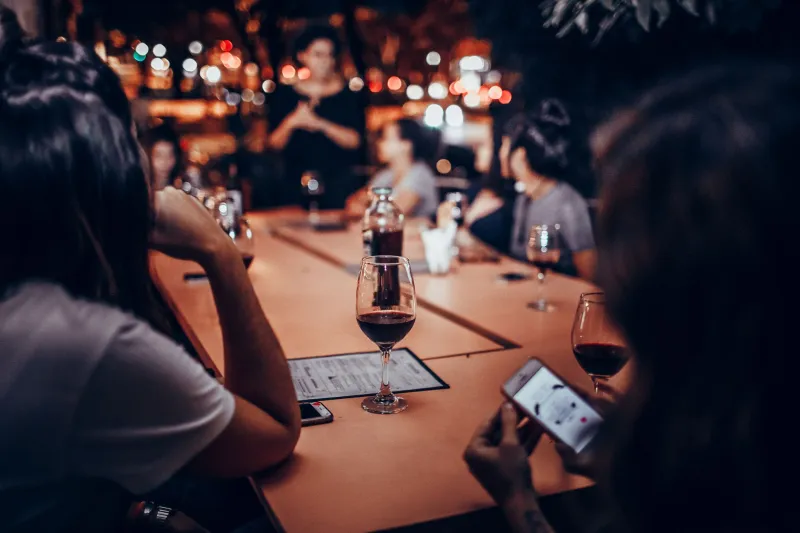
None of this happens in a lecture hall or a language class. It happens over cicheti, over a glass of Soave, over the ambient noise of a room that is genuinely, unselfconsciously alive. The food creates the conditions. The wine lowers the guard. The space does the rest.
Il Baccarò was never just about what's on the plate. It was always about what happens between the plates — the conversations, the misunderstandings that become jokes, the moments of unexpected connection that make a city feel smaller and more human.
If a few hands are moving a little more freely at the bar than they were before, that seems like a reasonable measure of success.