Closer to the Kitchen, Closer to the Truth: Why the Bar Counter Beats the Table Every Time
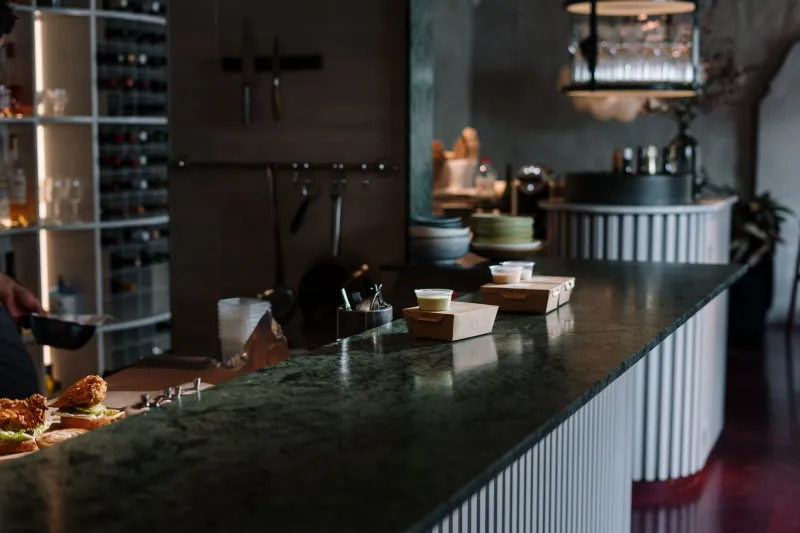
There's a moment that happens at Il Baccarò that most first-time visitors from the UK don't quite expect. They walk in, scan the room for an available table, spot one near the window, and make a beeline for it — handbag on the chair, coats arranged, menus requested. And all the while, the real action is happening two metres away, at the bar, where someone who's clearly been here before is getting handed something extraordinary before it even makes it onto any menu.
That's not an accident. It's the bacaro way.
What the Venetian Bar Counter Actually Means
In Venice, the bacaro is not a restaurant with a bar attached. It's a bar that happens to feed you — brilliantly, unpretentiously, and often without ceremony. The counter is the centrepiece. It's where the cicheti are laid out, where the ombre are poured, and where the relationship between the person behind the bar and the person leaning against it defines the entire experience.
For centuries, Venetians have understood something that formal dining culture never quite managed to articulate: proximity matters. Not just socially, but gastronomically. The closer you are to where the food is being prepared and plated, the better your chances of eating something genuinely special.
At a table, you receive what the kitchen has decided to send out. At the bar, you receive what's actually happening right now.
The Hierarchy Nobody Tells You About
Here's the thing about bar culture that British dining etiquette tends to overlook. In the UK, sitting at a table signals that you're a serious customer — that you've committed, that you're spending properly, that you deserve attention. Standing at a bar, by contrast, is often coded as informal, temporary, a placeholder until something better opens up.
Flip that logic entirely when you walk into a bacaro.
The people at the bar are not waiting for something better. They are already at something better. They can see what's just come out of the kitchen. They can ask — casually, without summoning a waiter — what's particularly good today. They get the first pour of a bottle that's just been opened. They hear the offhand comment from the person behind the counter about the burrata that arrived this morning or the anchovy preparation that didn't quite make it onto the evening menu because there wasn't enough of it.
Table service, for all its elegance, creates a layer of mediation between you and the food. The bar removes it entirely.
Freshness Follows the Counter
This isn't just philosophy — it's practical. In a bacaro, the cicheti on the counter are replenished constantly throughout the day and evening. What you see when you arrive is not the same spread that was there an hour ago. The kitchen is always moving, always responding, always producing small plates that reflect what's best and freshest in that particular moment.
When you're sitting at the bar, you notice when a new tray appears. You can point, ask, grab. You're part of a live, evolving meal rather than a fixed sequence of courses. There's no waiting for a waiter to bring the specials. The specials are right in front of you, and the person who made them is often standing close enough to tell you exactly what went into them.
At Il Baccarò, this is precisely the kind of conversation that happens every evening. A guest leans over the counter. Something new has just been set out — perhaps a sardine preparation with pickled onion, or a small bruschetta with something seasonal and sharp. A question gets asked. An answer comes back with genuine enthusiasm rather than rehearsed description. And suddenly, the meal has taken a direction that no printed menu could have predicted.
What British Diners Miss by Sitting Down Too Quickly
There's a cultural conditioning at play here that's worth naming. In Britain, queuing, waiting, and being seated are all associated with being treated properly. The table is a reward for your patience. The chair is evidence that you matter.
But this framework, while perfectly sensible in a traditional restaurant, becomes a limitation in a bacaro. It means you're handing over control of your experience before it's even begun. You're trusting a menu and a sequence rather than your own eyes and your own curiosity.
Some of the best things eaten at Il Baccarò have never appeared on any formal menu. They've been the result of a quick exchange at the counter — a recommendation, a small plate that was being tried out, a wine pairing that someone thought to suggest because they could see exactly what you were eating. None of that happens at a table in the corner.
How to Actually Do It
If you're new to this, the adjustment is simpler than it sounds. Walk in. Go to the bar. Don't apologise for not sitting down. Look at what's on the counter, ask what's just come out, and let yourself be guided by what's actually there rather than what's printed somewhere.
Order an ombra — a small glass of wine — and treat it as your entry point into the conversation. Nobody at a bacaro is in a hurry for you to decide. The rhythm is loose, the pace is yours, and the bar is designed for exactly this kind of unhurried exploration.
You can always move to a table later if you want to settle in for something more substantial. But don't skip the counter. Don't walk past the best part of the meal on your way to a seat.
The Counter Is Where the Restaurant Is Honest
There's something quietly revealing about a bar counter. It shows you what a kitchen is actually proud of — not what's been engineered to photograph well or priced to hit a margin, but what someone made today because the ingredients were right and the idea was good.
At Il Baccarò, the counter is the heart of everything. It's where Dublin meets Venice, where a Tuesday evening becomes something worth remembering, and where the best food very often goes to the person who had the confidence to simply stand there and ask.
Next time you come in, resist the table. Lean on the bar. See what happens.