Slow Down, Sit Longer: The Case for Eating the Italian Way in a World That Won't Stop Rushing
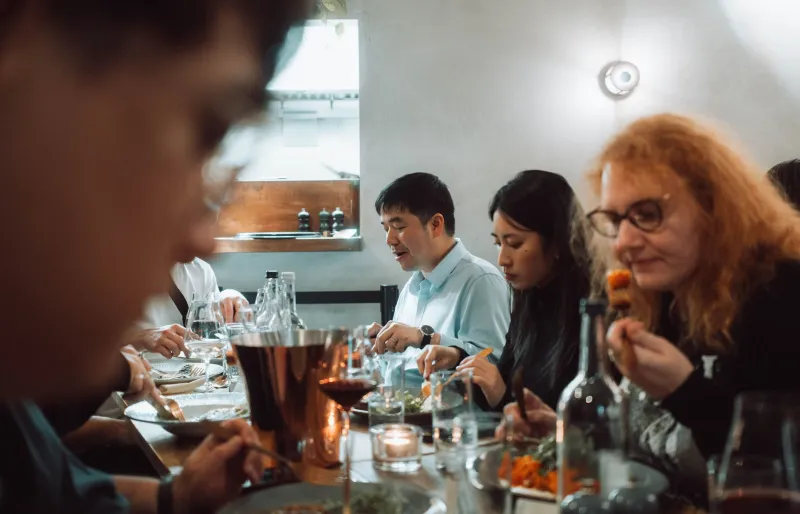
Let me tell you about a meal that lasted four hours.
It wasn't a special occasion, technically. No anniversary, no milestone birthday. Just a Tuesday in early autumn, a table in a small Italian restaurant, and the collective decision — made somewhere around the second carafe of wine — that none of us were in any particular hurry to be anywhere else.
We ate in the Italian way: slowly, without agenda, in the order that things felt right rather than the order the menu prescribed. Small plates arrived and were shared without ceremony. A bowl of olives. Bread that was actually good. Cured meats arranged without fuss. Pasta that someone at the table declared the best thing they'd eaten all year, then immediately disputed by the arrival of a braised lamb that made the declaration feel premature.
By the end, we hadn't done anything remarkable. We'd just eaten. Together. Without checking our phones very much.
It felt, absurdly, like an act of resistance.
The Fast-Casual Trap
Somewhere over the past decade, British dining culture made a deal with efficiency and called it progress. Fast-casual restaurants — clean lines, QR code menus, tables turned in forty-five minutes — became the dominant mode. The logic was seductive: lower prices, faster service, less faff. You know what you're getting and you get it quickly.
What the model quietly removed was the thing that made eating out worth doing in the first place. Not the food itself — fast-casual food is often perfectly decent — but the experience around it. The unhurried conversation. The sense that the restaurant actually wants you to stay. The accidental discovery, halfway through the evening, that someone at your table has a story you'd never heard before.
Eating, in the fast-casual model, becomes a transaction. You exchange money for calories, efficiently and without sentiment. And then you leave, because there's a queue and the table needs turning.
This is not, it should be said, how Italians think about food.
What the Bacaro Understood Centuries Ago
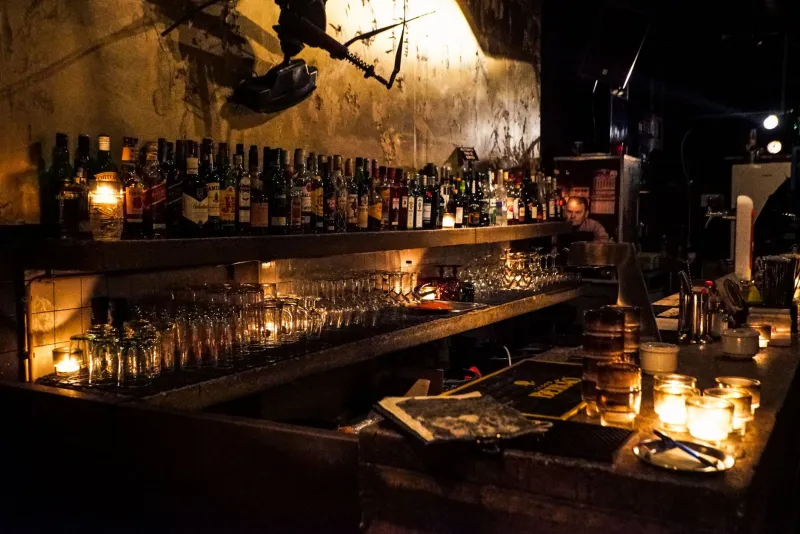
The bacaro is one of Venice's most enduring inventions, and also one of its most misunderstood exports. In its original form — and still, in the best bacari scattered through the city's labyrinthine streets — it is not a restaurant in any formal sense. It's a place to stand, or perch, with a small glass of wine (an ombra, in Venetian dialect) and a cicchetto or two: a small bite, something preserved, something pickled, a sliver of salt cod on bread, a meatball still warm from the kitchen.
The genius of the bacaro isn't the food, though the food is often extraordinary in its simplicity. It's the social architecture. You don't book. You don't sit down in any regimented way. You arrive, you find your people, you eat a little, drink a little, talk a great deal, and eventually drift to the next place or stay put because the conversation got interesting. Time is not rationed. Hospitality is not performed. It simply exists, as naturally as the building around it.
Transplant that spirit to Dublin — to a city that has always understood the value of a good room and a long evening — and something quietly magical happens.
Dublin Gets It
There's a reason Dublin's Italian dining scene has developed the way it has, and it isn't simply geography or demographics. It's temperament. The Irish have a native instinct for the kind of hospitality the bacaro tradition embodies: generous, unpretentious, oriented toward the pleasure of company rather than the transaction of service.
Walk into the right Italian restaurant in Dublin on a Friday evening and you'll find tables of people who arrived for a quick dinner and are still there, two hours later, arguing cheerfully about something that started as a conversation about the wine and somehow became a debate about something else entirely. Nobody looks uncomfortable about this. The staff aren't hovering. The kitchen is still sending things out. The evening has found its own rhythm.
This is what Italian long-form dining does when it's done properly. It removes the pressure of the clock and replaces it with the pleasure of the moment.
The Philosophy of the Long Meal
At its heart, the Italian approach to eating together is a philosophical position, not merely a culinary one. It says, quietly but firmly, that sitting around a table with people you care about is one of the most worthwhile things you can do with your time. That food is not fuel but occasion. That the meal is not a means to an end but the end itself.
This runs directly counter to the assumptions of modern food culture, which treats eating as something to be optimised — faster, cheaper, more convenient, more Instagrammable. The bacaro tradition doesn't care about optimisation. It cares about presenza — presence. Being where you are, with who you're with, for as long as the evening allows.
There's a reason multi-course Italian meals feel so different from other long dining experiences. It's not just the food or the wine, though both matter. It's the pacing — the way courses arrive with enough space between them to breathe, to talk, to let one flavour settle before the next one arrives. It's the sense that the kitchen is in conversation with the table, not processing orders in sequence.
What British Diners Stand to Gain
For British readers — particularly those who've grown accustomed to the rhythms of London's restaurant culture, where efficiency and novelty tend to dominate — a meal in the bacaro tradition can feel genuinely disorienting at first. Where's the urgency? Why isn't anyone rushing?
The answer, once you settle into it, is obvious. There is no urgency because urgency is the enemy of enjoyment. The meal is not a problem to be solved. It's an experience to be had.
If you haven't tried this style of eating in Dublin, the case for making the trip is straightforward. Come hungry. Come with people worth talking to. Order more than you think you need and share everything. Let the evening take the shape it wants to take.
Leave your productivity mindset at the door.
It'll be there when you get back. The cured meat and the second carafe of Vermentino, on the other hand, will not.
One Last Thing
That four-hour Tuesday meal I mentioned at the start? I couldn't tell you exactly what we talked about. I couldn't reconstruct the precise order of the dishes or account for how the time disappeared.
But I remember how it felt. Easy. Warm. Like being properly fed in every sense of the word.
That's the bacaro promise. It doesn't ask very much of you. Just your time, your appetite, and your willingness to stop, for one evening, pretending you're in a hurry.