Standing Closer, Listening Better: The Unwritten Rules of Conversation at an Italian Wine Bar
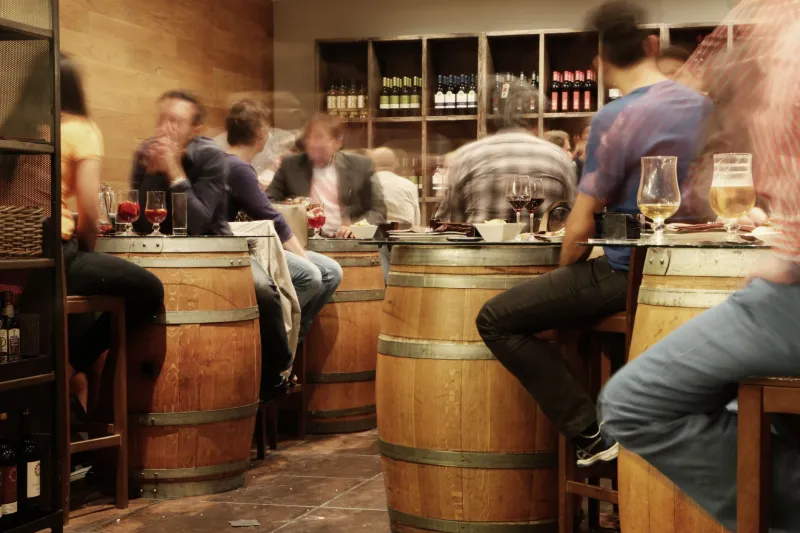
Walk into any traditional bacaro in Venice and you'll notice something immediately: nobody is sitting in silence staring at their phone. Conversations overlap, hands move, glasses clink at odd intervals, and somehow — against all odds — everyone seems to know everyone else within about twenty minutes. It looks effortless. It isn't, quite. There's a social grammar at work, and once you learn to read it, the whole experience shifts from slightly intimidating to completely magnetic.
For British visitors in Dublin — whether you've wandered into Il Baccarò for the first time or you've been coming for years — understanding that grammar is what separates a good night from a genuinely memorable one.
Arrive with Curiosity, Not an Agenda
The first rule of bacaro conversation is the hardest one for British sensibilities to accept: you don't need a reason to talk to someone. In the UK, striking up conversation with a stranger at a bar often requires either a notable event (a football result, a delayed train) or at least two drinks for courage. In Italian bar culture, proximity itself is reason enough.
At a standing bar, you are already in the conversation. The physical setup — no tables to retreat behind, no reserved corners to disappear into — does half the work for you. Your job is simply not to undo it. Put the phone away. Make eye contact with the person next to you when the barman says something funny. Smile when the wine is poured.
You don't have to open with a witty line. A nod at someone's glass and a raised eyebrow — what are you drinking? — is all it takes. Italians are not looking for cleverness at the bar. They're looking for warmth.
The Timing of Questions
Once you're in a conversation, pace yourself. British social interaction often front-loads questions — where are you from, what do you do, how long are you in Dublin — as a way of establishing context before relaxing into the chat. Italian bar conversation tends to work the other way around. You talk first. You laugh first. The biographical details emerge naturally, much later, and sometimes not at all.
If you ask someone what they do for a living within the first five minutes at a bacaro, you haven't broken any law, but you may have subtly signalled that you're categorising rather than connecting. Try leaving the professional questions alone for a while. Ask about the wine instead. Ask whether they've eaten. Ask if they've been to the place down the road. These questions open doors rather than filling in forms.
When the moment does feel right to go deeper — and you'll feel it, because the conversation will slow and settle — ask something genuine. Not a pleasantry. Something you actually want to know.
Rounds, Refills, and Knowing When to Offer
The etiquette around buying drinks at an Italian wine bar is looser than at a British pub, but it isn't without its own logic. At a bacaro, rounds are less rigid — people come and go, glasses are topped up rather than replaced, and the barman often keeps a rough mental tab rather than charging per drink. This means the obligation to buy the next round isn't as clock-like as it might be in a Wetherspoon's on a Friday.
That said, the instinct behind rounds — reciprocity, generosity, the signal that you want the evening to continue — absolutely translates. If someone has been chatting with you for twenty minutes and their glass is looking low, offering to refill it is not just polite. It's a social statement. It says: I'm enjoying this. Let's keep going.
The key is not to make a performance of it. Don't announce it loudly or wait for applause. Catch the barman's eye, gesture quietly at the other glass, and get on with the conversation. The Italians do this with a kind of casual elegance that takes practice, but the intention is more important than the execution.
Joining a Conversation Already in Progress
This is where most British visitors hesitate — and it's completely understandable. Inserting yourself into a conversation between two people who already know each other feels presumptuous at home. At a bacaro, it's practically encouraged.
The trick is to enter sideways rather than head-on. Don't interrupt. Instead, react. If you overhear something that makes you smile, let that smile be visible. If someone says something you agree with, a small sound of agreement — a soft esatto if you're feeling adventurous, or simply a nod — creates a natural opening. Nine times out of ten, the group will widen to include you without anyone having to make a formal introduction.
If you're at Il Baccarò and the bar staff are chatting with regulars, the same applies. The team here are used to making people feel at home, but the best conversations happen when guests lean in rather than waiting to be drawn out.
Body Language: The Signals That Say You Belong
Perhaps the most underrated element of bacaro culture is physical. How you hold yourself at the bar communicates as much as what you say.
Facing outward — body angled towards the room rather than hunched over your drink — is the single most important signal. It says you're open, present, available for conversation. Facing the wall or keeping your back to the room says the opposite, even if you don't mean it to.
Standing close is also part of it. British personal space norms are generous by European standards, and at a busy standing bar, there isn't room to enforce them anyway. Leaning in slightly when someone speaks — especially if it's noisy — reads as interest rather than intrusion. It's the physical equivalent of saying I'm listening.
And when the conversation is good, let it show. Italians are not subtle about enjoyment. Laughing properly, gesturing when you're animated, touching someone's arm lightly when you're making a point — none of this is considered excessive. Restraint, paradoxically, can read as coldness.
One Last Thing
All of this is easier than it sounds, particularly at a place like Il Baccarò, where the environment does a lot of the heavy lifting. The bar is built for exactly this kind of evening — wine that encourages lingering, food that gives you something to talk about, and a room that puts strangers in comfortable proximity.
The Venetian bacaro tradition has always understood something that British drinking culture is only beginning to rediscover: the point of the glass is not the glass. It's the conversation it makes possible. Come with that in mind, and the rest tends to follow.